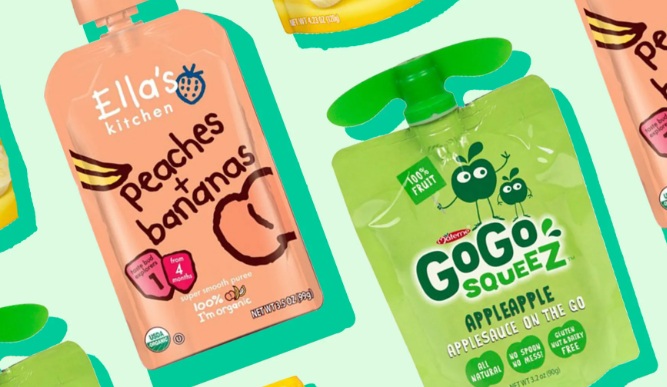
Baby food pouches promise a quick, tidy way to feed a hungry baby when life is already running at full speed. However, new UK research suggests that many pouches are closer in texture and nutritional profile to sweet drinks than the balanced complementary foods their packaging may imply.
That sounds alarming, but this is not a reason to feel guilty or empty the kitchen cupboard. Instead, the findings offer a useful prompt to look at how pouches fit into a baby’s wider diet and, crucially, how babies learn to eat.
What Did the New Baby Food Pouch Study Find?
Researchers from the University of Glasgow and First Steps Nutrition Trust examined 298 wet commercial baby foods sold in six large Glasgow supermarkets. Of these, 178 came in spouted pouches.
The peer-reviewed study found that:
- 49% of spouted pouches had a liquid consistency, compared with 7% of products in other packaging.
- Only 10% of pouches were classed as soft foods requiring more oral manipulation, compared with 77% of other products.
- 61% contained more sugar per 100g than breast milk, compared with 8% of foods in other packaging.
- Just 8.5% met all the researchers’ criteria for a suitable complementary food, while 29% met none.
Importantly, this product survey did not prove that an occasional pouch causes poor health, delayed development or fussy eating. It relied on manufacturers’ labels and rarely had information about iron. The results deserve attention, but not sensationalism.
Why Food Texture Matters During Weaning
Weaning is not simply about adding calories to a baby’s diet. It is also a period of rapid learning.
Babies Need to Practise Eating
Sucking comes naturally, while biting, chewing and moving food around the mouth require experience. As babies progress from smooth purées to mashed, lumpy and finger foods, they practise coordinating their lips, tongue and jaw. They also learn to cope with different sensations and decide how much food to take.
Finger foods also support hand-eye coordination and growing independence. Eating with other people gives babies opportunities to watch, imitate and join in.
A pouch sucked through a spout offers little of this practice. Using a spoon lets the baby see the food and practise taking it, although a smooth purée still cannot provide the experience of varied textures.
What About Sugar in Baby Food Pouches?
The words “no added sugar” can be reassuring, yet they do not mean that a product is low in sugar. A pouch made mainly from puréed fruit can be naturally very sweet, even when the manufacturer has added no table sugar or syrup.
Sweet fruit can also mask vegetables. A broccoli or spinach pouch may rely heavily on apple, pear or banana. Repeated sweet blends leave fewer opportunities to explore savoury, bitter and more complex flavours.
Energy and protein matter too. From around six months, complementary foods should begin adding nutrients and variety alongside breast milk or first infant formula. A thin fruit purée may be convenient, but it is not nutritionally equivalent to a meal containing vegetables, starchy food and an age-appropriate source of protein or iron.
Do Parents Need to Stop Using Pouches?
No. The more sensible conclusion is that pouches should remain a convenience food rather than becoming the default meal or snack.
The NHS advises parents to use commercial pouches, jars, pots and trays only occasionally. It also recommends squeezing pouch contents onto a spoon, choosing products with less sugar and moving from purées to mashed or finger foods as soon as possible.
Pouches can still be useful during travel, a long appointment or a hectic day. Convenience has value, and the overall pattern across days and weeks matters most.
Five Ways to Use Baby Food Pouches More Wisely
1. Read the Ingredients, Not Just the Front Label
Ingredients appear in order of weight. If apple, pear or banana comes first, the product may taste much sweeter than the vegetables pictured on the front. Compare the sugar per 100g and look for savoury options with a broader range of ingredients.
2. Put the Pouch on a Spoon
Avoid letting your baby routinely suck from the spout. Spoon-feeding makes the food visible and supports a more recognisable eating experience. The NHS also warns that sucking directly from a pouch can increase the risk of tooth decay.
3. Add a Safe, Age-Appropriate Texture
Offer soft finger foods or a mashed component alongside the purée. Depending on your baby’s stage, this might include soft-cooked broccoli, mashed beans, ripe avocado, strips of omelette, full-fat unsweetened yoghurt or thick porridge. Always follow age-appropriate preparation and choking-safety advice.
4. Avoid Treating Every Pouch as a Complete Meal
A fruit pouch may work as one part of a meal, but it is unlikely to provide everything a baby needs from complementary food. Consider what else supplies energy, protein, iron and texture.
5. Keep Mealtimes Responsive
Let your baby decide whether and how much to eat. Watch for signs of hunger and fullness, allow mess and avoid pressure. Exploration is part of learning, even when more food reaches the floor than the mouth.
The Bigger Picture: Variety Beats Perfection
Parents do not need to make every meal from scratch, and one pouch does not undo a week of varied meals. Aim for different tastes, changing textures, safe finger foods and relaxed opportunities to eat together.
At Victoria House Nursery, we view mealtimes as part of children’s learning, not simply a pause in the day. They offer opportunities to build independence, practise physical skills, communicate with others and develop a positive relationship with food.
So, are baby food pouches healthy? Some are better choices than others, and all can be convenient. However, the latest evidence supports using them occasionally and ensuring they do not crowd out the foods, textures and social experiences that help babies learn how to eat.
Frequently Asked Questions
Are all baby food pouches unhealthy?
No. Products vary considerably, and occasional use is unlikely to be a problem. Check the ingredients and nutrition label, choose less-sweet options and consider what the pouch contributes to the wider meal.
How often should my baby have a pouch?
The NHS does not set a precise weekly number, but advises using pouches only occasionally rather than as an everyday food. Your baby’s overall dietary pattern matters more than a single meal.
Is a vegetable pouch better than a fruit pouch?
Not necessarily. Some vegetable-branded pouches contain mostly sweet fruit. Check the ingredient order and sugar content rather than relying on the product name or images.
Can my baby suck purée directly from the pouch?
The NHS recommends squeezing it onto a spoon. This supports eating practice and reduces prolonged contact between sweet purée and the teeth.
Do baby food pouches cause speech delay?
This study did not investigate speech and does not show that pouches cause delay. Varied textures help babies practise oral skills used in eating, but parents with concerns about feeding or speech should speak to a health visitor, GP or speech and language professional.