What if learning to name a feeling, wait for a turn or solve a disagreement mattered just as much as recognising letters and numbers? New long-term research suggests that these apparently small pre-school skills may influence mental health, relationships and life satisfaction well into adulthood.
For parents, that is a reassuring message. Our School readiness programme at Victoria House is not about pushing formal learning earlier, it’s about helping children develop the emotional security, language and confidence that allow learning and relationships to flourish.
What did the new preschool study find?
Researchers followed 356 children who had attended Head Start preschools in Pennsylvania in the United States. At an average age of four and a half, some children experienced the usual Head Start programme, while others received an enhanced programme called REDI.
REDI combined language development with structured teaching around friendship, emotions and social problem-solving. Children had two lessons each week, while practitioners received training and coaching so they could reinforce those skills during real classroom situations.
Eighteen years later, when participants were aged 21 or 22, the researchers found meaningful differences. Young adults who had taken part in REDI reported fewer depressive symptoms, less loneliness and fewer conduct problems. They also reported greater empathy, stronger emotional support, more healthy days and higher life satisfaction.
Benefits appeared across seven of the 11 areas measured. Participants also reported almost two additional healthy days each month. Because the original study was a randomised controlled trial with an 18-year follow-up, it offers unusually valuable evidence, although no single preschool activity determines a child’s future.
Why these are not simply “soft skills”
Social and emotional development can sound less urgent than phonics or counting. In reality, a child who can seek help, manage frustration and rejoin a group after a disagreement is better able to participate and learn. Emotional vocabulary also helps children communicate instead of relying entirely on behaviour.
At Victoria House we follow England’s Early Years Foundation Stage which reflects this by identifying personal, social and emotional development as one of three prime areas. Evidence reviewed by the Education Endowment Foundation favours combining approaches such as modelling emotions, supporting self-regulation and creating collaborative learning communities.
Self-regulation begins with co-regulation
Young children are not born able to calm themselves on command. They first learn regulation through calm, responsive adults.
When an Educator says, “You’re upset because you wanted the bike. I’m here. Let’s work out what you can do while you wait” they lend the child calm, give language to the feeling and model a response. Repeated experiences like this gradually become part of the child’s own toolkit.
Language makes emotions manageable
The REDI programme deliberately combined social-emotional teaching with language development. That matters because children need words to understand their inner world, explain a problem and negotiate with someone else.
Shared stories are especially useful. Discussing what a character might feel and do next builds vocabulary, empathy and problem-solving while allowing children to explore difficult emotions safely.
What high-quality practice looks like
Social and emotional learning should not be confined to a weekly feelings activity. It is built through hundreds of ordinary interactions across the day.
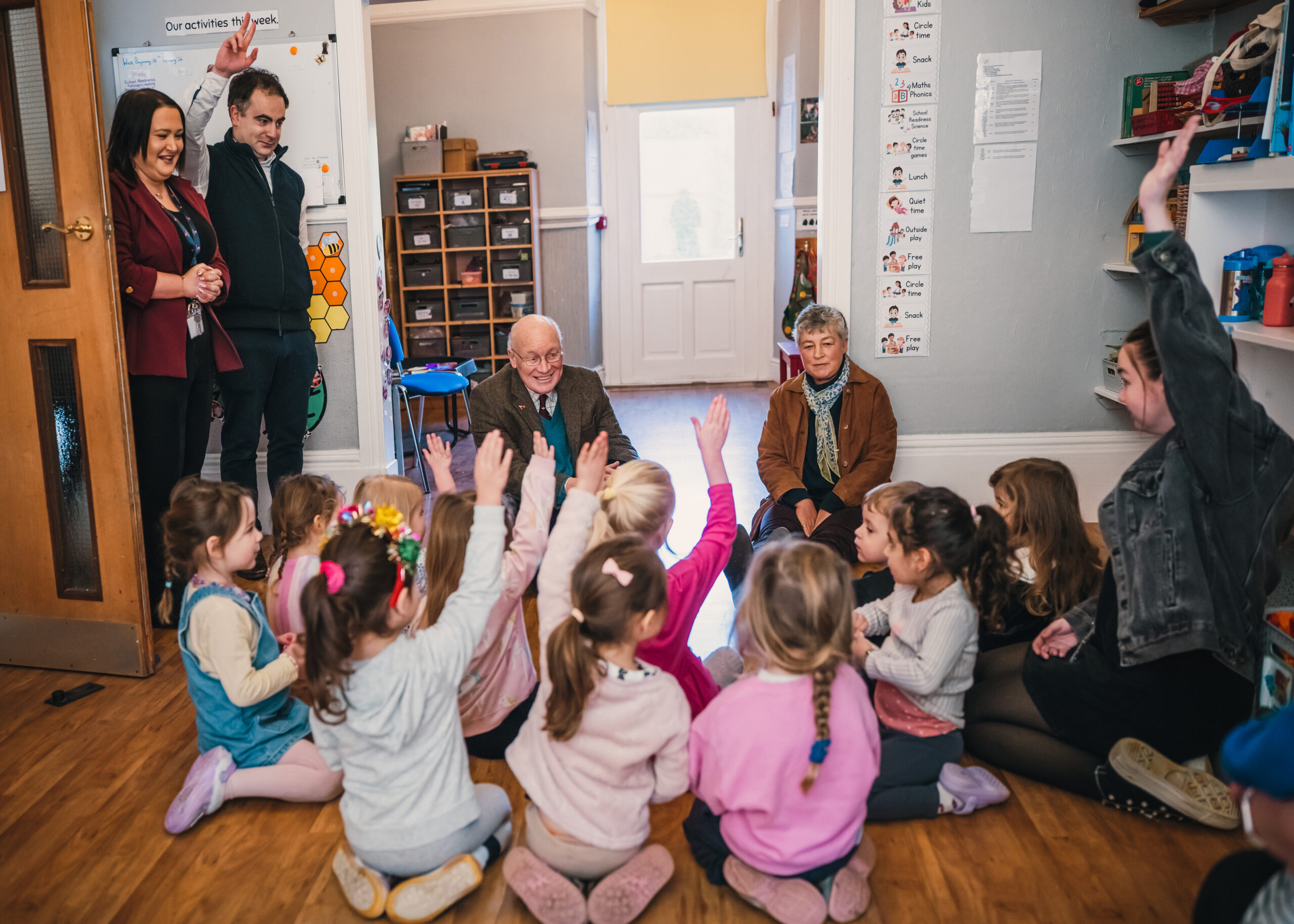
At Victoria House, our educators are trained to build warm, dependable relationships with every child. They help children recognise and name their emotions without defining them by their behaviour, while maintaining clear and predictable boundaries. Rather than immediately solving every disagreement, they guide children to listen, negotiate and find a way forward. Through stories, role play, conversation and everyday play, children learn to understand different perspectives, collaborate, wait, try again and repair relationships when things go wrong. Our educators model these same skills through calm communication, thoughtful apologies and respectful problem-solving.
Relationships, communication, independence and emotional regulation are central to our curriculum because they are part of how meaningful learning happens.
Five ways parents can nurture these skills at home
Name the feeling and hold the boundary
Try: “You’re angry that it is time to leave. It is okay to feel angry, but I won’t let you hit.” This accepts the emotion without accepting unsafe behaviour.
Ask questions that build problem-solving
Ask, “What could we try?” or “How could we make space for both of you?” Offer choices if your child needs help.
Talk about the people in stories
During a familiar book, ask what a character might know, want or feel. A short, natural conversation is enough.
Allow manageable frustration
Confidence grows through manageable difficulty. Give your child time to fit the puzzle piece, put on a shoe or negotiate before stepping in.
Let children see adults repair mistakes
If you become impatient, say, “I spoke too sharply. I’m sorry. Let me try again.” Children learn that relationships require repair, not perfection.
What the research cannot tell us
The study involved children from lower-income families in one US region and REDI was an intensive, carefully supported programme. Four of the 11 adult outcomes showed no detectable difference, and the young-adult measures were largely self-reported.
Therefore, the study does not prove that any single nursery curriculum will create a happier adult. It does however add to a wider evidence base suggesting that intentional, skilled support for emotions, relationships, language & problem-solving deserves the same seriousness as more visible academic preparation.
The bigger lesson for parents
When selecting a nursery, look beyond displays, apps and promises about being “school ready.” Ask how educators comfort an overwhelmed child, respond to conflict, encourage independence and build secure relationships. These everyday answers will reveal far more about developmental quality.
Children do of course need knowledge. But they also need to feel safe enough to explore, confident enough to try and supported enough to recover when something goes wrong. The latest research suggests that these foundations may remain valuable long after the preschool years have ended.
Quick FAQ
What is social and emotional learning in early childhood?
It is the development of skills that help children recognise emotions, manage their responses, build relationships, show empathy and solve social problems.
At what age does emotional development begin?
From birth. Babies begin through responsive relationships and co-regulation. As language and independence grow, adults can gradually help children understand and use more strategies for themselves.
Should toddlers be able to regulate their own emotions?
Not consistently. Toddlers still rely heavily on calm adults to help them manage strong feelings. Self-regulation develops gradually through repeated co-regulation, modelling and practice.
Does social-emotional learning replace academic preparation?
No. It supports it. Children who can communicate, focus, persist, cooperate and ask for help are better equipped to benefit from literacy, mathematics and other learning.
How can I tell whether a nursery supports these skills well?
Look for warm relationships, calm and respectful boundaries, rich conversation, collaborative play and educators who coach children through feelings and conflict rather than relying mainly on rewards, punishment or distraction.